
With the new school year beginning, it’s given me the opportunity to look back and reflect on my first year as Education Manager in the Strategic Resources team at Thames Water.
Throughout the year, I've been engaging with children and young people across the region, from Steventon to Kingston, speaking with students about the growing pressure on our future water supply. Without urgent action, we forecast a shortfall of one billion litres of water per day for our customers by 2050; a reality that will affect today's young people most.
These conversations have been both meaningful and essential. Through dedicated school visits and debate workshops, I've been able to explain the work we're doing to keep the taps flowing into the future, including progressing a new reservoir in Oxfordshire that would secure water supply for 15 million people across the South East, including Thames Water, Affinity Water and Southern Water customers, along with an essential drought resilience project in West London.
Why we need to invest in our water future
Water is fundamental to everyday life, yet it’s easy to take for granted. We turn on the tap and expect it to be there instantly, but we rarely pause to think about where it comes from or how much we’re using. Earlier this week, the Met Office declared summer 2025 the warmest on UK record, with England having experienced its driest spring in over a century, and many of our Thames Valley customers remain under a hosepipe ban.
With the Environment Agency predicting more frequent droughts, it’s vital we help young people not only understand the scale of the challenge but also see the role they can play in shaping solutions.
Our proposed projects are of national significance and will impact the future generation the most, so it’s important we share our plans with them and listen to their ideas.
Listening to the next generation
This year, I’ve been fortunate to deliver a range of activities across different age groups and communities.
We partnered with Debate Mate to deliver workshops about the Teddington Direct River Abstraction (TDRA) project. This proposed project in London is designed to deliver up to 75 million litres of water each day during drought and would protect water supply for millions of Londoners.
Since much of the new infrastructure for the project - such as new tunnels - will be built in West London, we delivered sessions in the local area, including Kingston, Richmond and Hounslow. These sessions encouraged students to think critically about the pros and cons of building new infrastructure. I remember one student local to the project, was concerned about how the construction might affect her community but she also recognised the broader need of ensuring there’s enough water for everyone. The debate gave her and her classmates the chance to explore both sides of the argument and learn how challenging and complex these decisions can be.
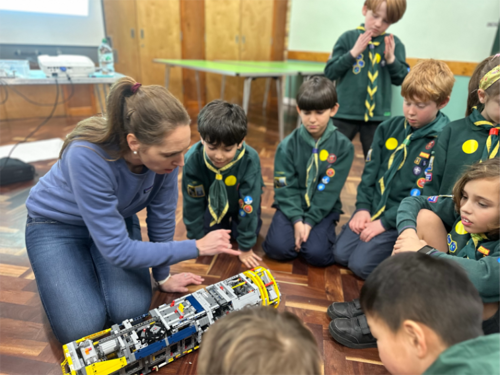
In Twickenham, we held workshops for almost 100 Beavers, Cubs and Scouts, showing how drilling boreholes helps us understand the geology needed for tunnel construction on the TDRA project. Our engineers brought in fossil finds dating back 45 million years, sparking curiosity and enthusiasm to even the most technical parts of our work. The highlight for many was seeing our Lego tunnel boring machine in action, bringing engineering to life.
I’ve also really enjoyed running creative workshops focused on embedding nature design principles to our proposed reservoir site in Oxfordshire. The reservoir will be so much more than a place to store water and we’re working to create somewhere that people can enjoy getting closer to nature, whether it be out on the water or exploring the park’s trails, woodlands and open spaces.
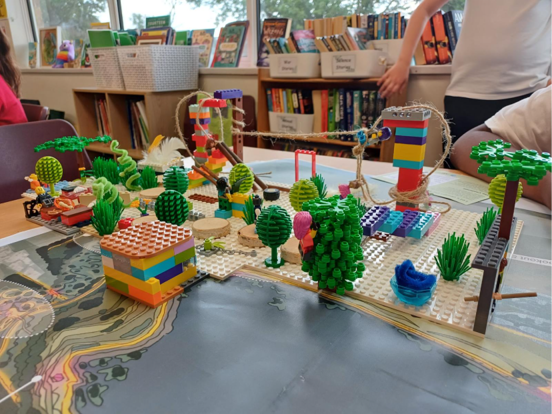
That’s why we wanted to hear first-hand from local young people about what they would like to see at the reservoir site. We used LEGO bricks to help students explore different aspects of the Masterplan, inspiring them to design outdoor play spaces, an observation tower, nature education centres and finding ways for visitors to connect with wildlife around the water. Their contributions are helping shape our thinking about how this project will create a new open space for everyone to enjoy.
What’s next?
Looking ahead, I can’t wait to build on what we’ve started this year. In Oxfordshire, we’ll be rolling out our successful Debate Mate workshops, linking directly to the GCSE Geography curriculum and helping students explore how water challenges affect their own communities.
At Kingston University, we’re supporting a module that gives students a real project brief on an environmental challenge linked to the TDRA project, with a platform to pitch their ideas to a panel of Thames Water experts.
I’m also exploring new opportunities in areas such as archaeology and the environment. With work already underway to document the rich history of the proposed reservoir site, we are looking at ways to bring those discoveries to life, showing how history, science and geography all connect beneath our feet.
If you’re a teacher, school, university, or education leader interested in hearing more about what we’re doing and future opportunities, I’d love to hear from you.
Please get in touch to explore how we can bring these conversations into your classroom. Email info.SROs@thameswater.co.uk
Discover more
Stay up to date and read our latest news